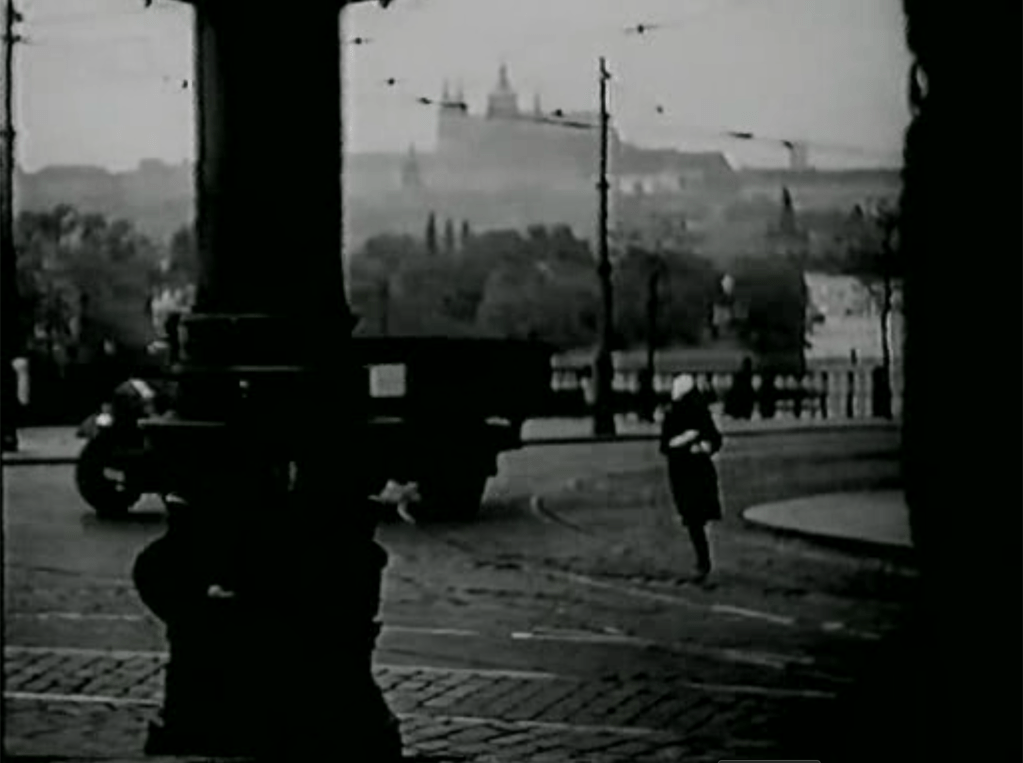
Otakar Vávra’s “We Live In Prague” (Žijeme v Praze) is an experimental 13 minute “fejeton,” or short film capturing life on the streets, shot in 1933 and released in 1934.
Vávra edited “We Live In Prague” with Alexander Hackenschmied. Hackenschmied organized screenings of avant-garde films at Kotva Cinema, which premiered Vávra’s 1930 short film “The Light Penetrates the Dark” (Světlo proniká tmou). In 1935, Hackenschmied worked as cinematographer on Vávra’s short film “November” (Listopad). Both men also made films at Baťa Film Studio in Zlín. Hackenschmied later emigrated to the US, where he changed his name to Alexander Hammid and married choreographer and filmmaker Maya Deren. Together, they made the seminal 1943 surreal short film “Meshes of the Afternoon.”
Two other crew members also worked on Vávra’s “November”: production manager Ladislav Kolda, and composer E. F. Burian. Cameraman Jaroslav Tuzar later shot Vávra’s “The Way to the Barricades” (Cesta k barikádám), “August Sunday” (Srpnová neděle), and “The Night Guest” (Noční host).
“We Live In Prague” depicts the city as vibrant and energetic thanks to the upbeat music and quick editing. Many locations are still recognizable from today: Čertovka, Schwarzenberg Palace, the Astronomical Clock, St. Vitus Cathedral, St. Nicholas Church in Malá Strana, U Fleků, Church of Our Lady Before Týn, and the National Theater. The Old Town Hall still has it’s east wing, which was destroyed in the Prague Uprising of 1945 and never rebuilt.
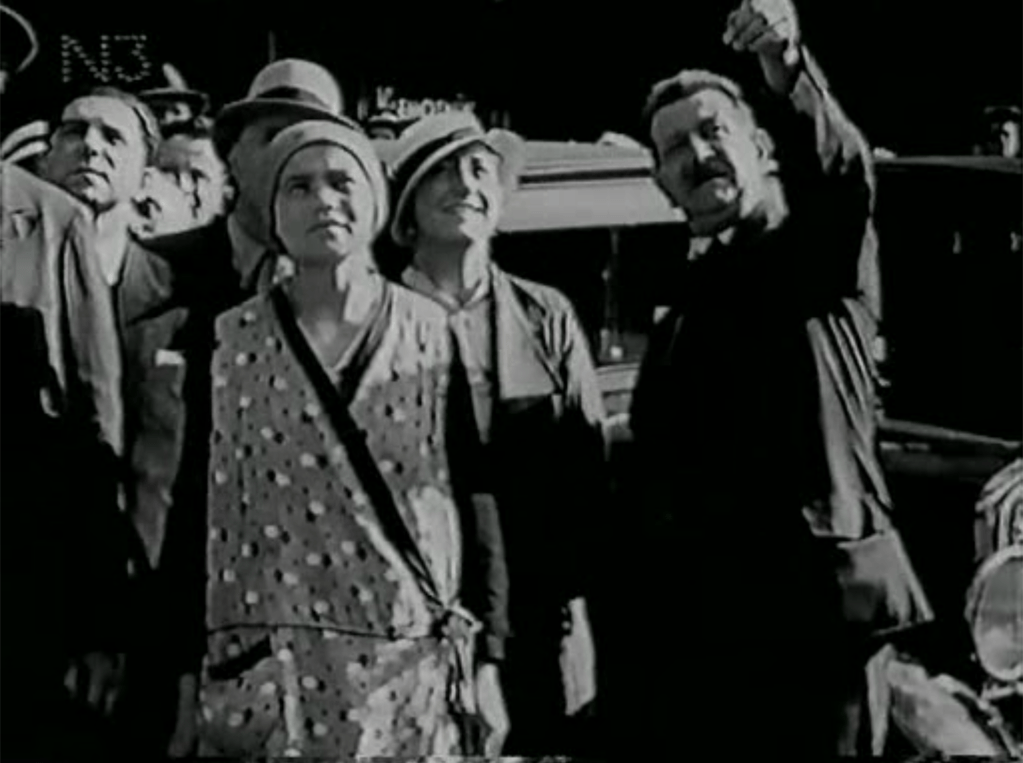
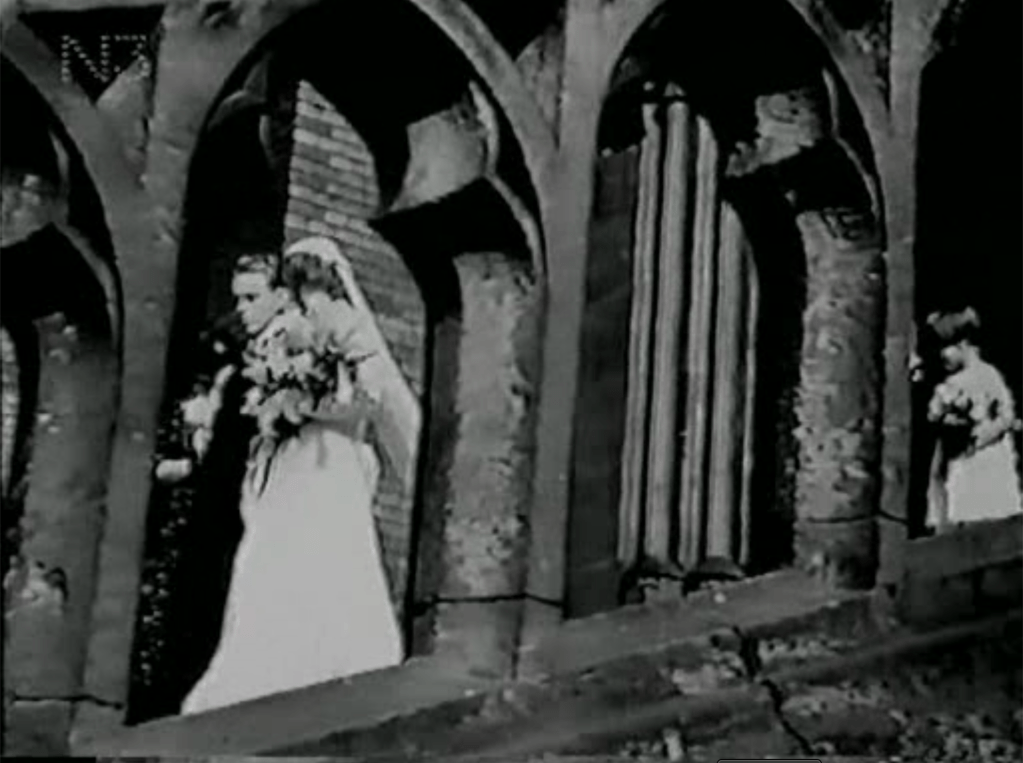
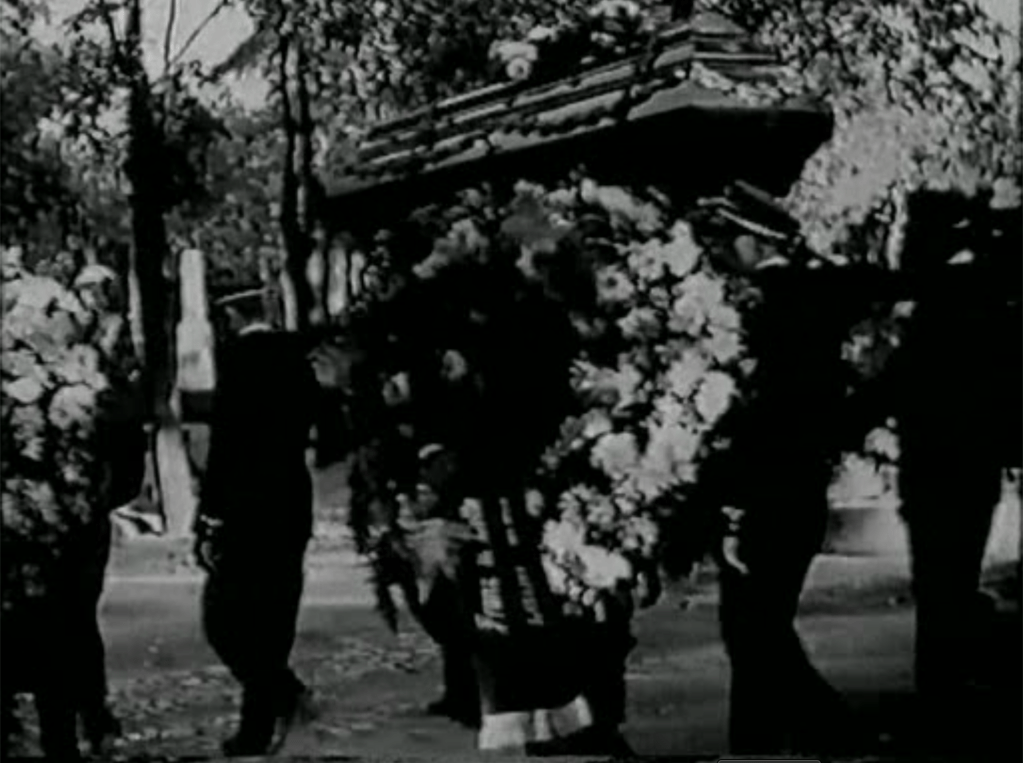
One sequence I love shows women looking at a bridal display in a shop window, cut to a beautiful, ornate wedding, cut to an equally ornate funeral, cut to a baby, then children playing, then a child feeding a goose, and then dead geese for sale in a market. I haven’t seen many of these slice of life in the city films, so I can’t say if these moments of death are typical or not, but to my modern American eyes, it feels uniquely Czech.
Another interesting moment shows a woman apparently waiting for someone who doesn’t show up. She leaves down some stairs, and passes a man who says hello. The camera then moves down to their feet on the stairs, where she’s clearly trying to leave while he manages to convince her not to, and the camera follows their feet back up the stairs together. We then see them kissing in a doorway. It’s so simple, but conveys so much.
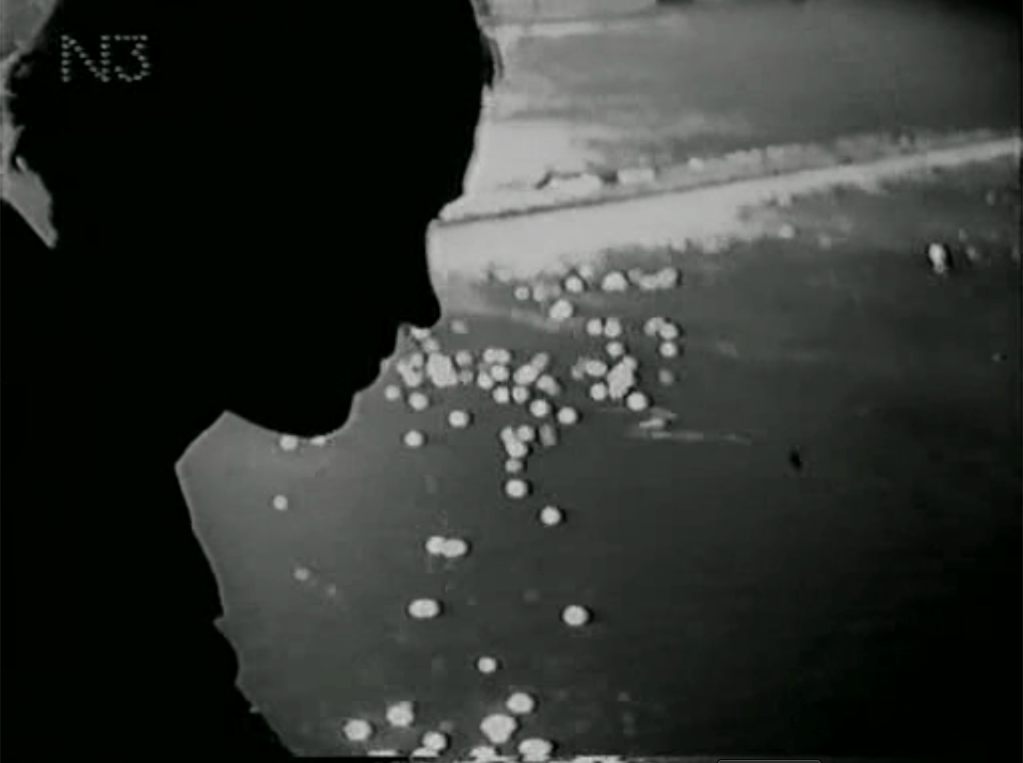
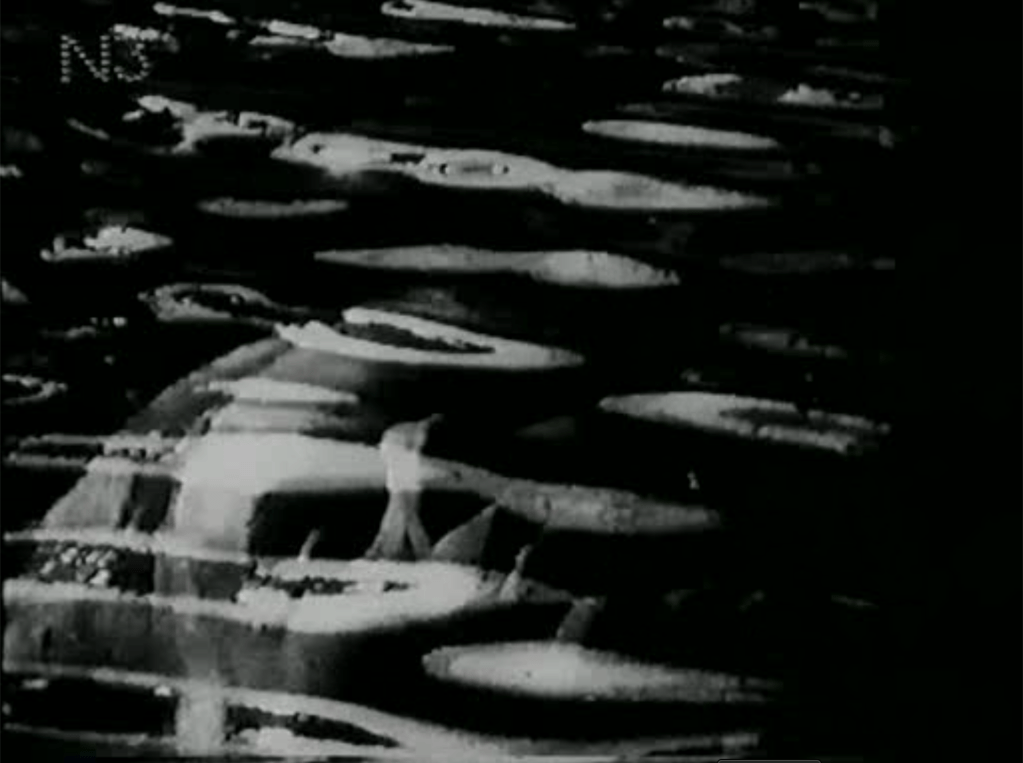
The music slows down towards the end for a poetic scene of a woman gazing into the sparkling Vltava River. And then she jumps! I was quite shocked. The way it is shot and cut is really lovely and poignant, though. It again seems surprising to be included in this sort of film. However, one of the most visited spots on Charles Bridge today is the small plaque marking the spot where St. John of Nepomuk was martyred by being thrown into the river, so perhaps it is not so unusual.
Then we see the city lights and neon signs at night (moving across the screen like a continuation of “The Light Penetrates the Dark”), the music picks back up, and life goes on. The film ends with statues on the Charles Bridge, and of course, Prague Castle. “We Live In Prague” is a beautiful snapshot of a specific time, yet it feels timeless. I love seeing the city so lively, and it is nice seeing this playful side of Vávra in his early films before he fell in line with what was demanded by the authoritarian du jour.
 Emily Barney
Leave a comment